
How To >
How To Use a Strimmer / Brush Cutter
Read our blog to learn how to use a strimmer / brush cutter & find out the difference between these two versatile garden tools.
The UK's largest tool hire network

Read our blog to learn how to use a strimmer / brush cutter & find out the difference between these two versatile garden tools.
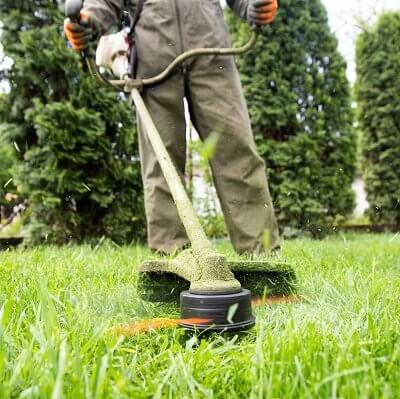
A strimmer is a versatile garden tool for cutting grass. They feature a cutter, shaft, handle, and motor. Their design allows you to cut grass in a precise way. Strimmers are ideal for cutting in borders, on uneven and sloped terrain, and around objects. With one, you can trim around and near to trees, walls, structures, and ornaments with ease. They allow you to trim grass in straight lines and in a consistent, uniformed way. You can also use them to clear some overgrown vegetation.
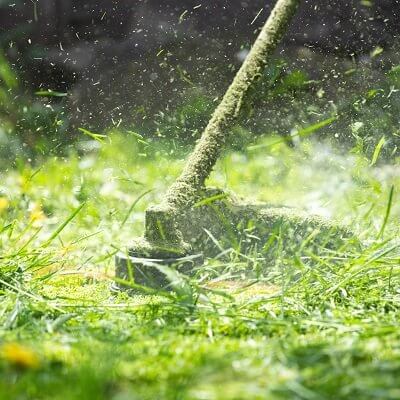
Strimmers have a nylon line on a spool. The motor spins the spool at a high rate. As the spool rotates, the nylon string becomes taut, allowing it to sever grass and light foliage.
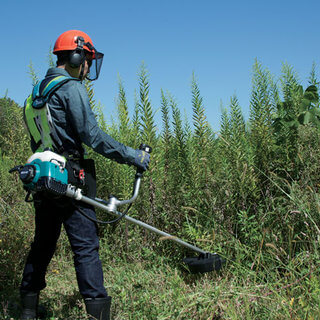
A brush cutter is very similar to a strimmer. But, instead of a nylon string on a spool, they have metal cutting heads. Brush cutters also tend to have more powerful motors.
These tools are better for garden clearing. They can cut through dense brush, and thick vegetation. Brush cutters are ideal for clearing areas when a lawn mower would struggle.
Some common names for strimmers or brush cutters. - The name ‘strimmer’ is originally a brand name. It derives from string trimmer. You might also be familiar with the names grass cutter, clearing saw, brush saw, scrub cutter, line cutter, whipper snipper, weed eater, weed whacker, weedwacker, and weed whip!
Although brush cutters and strimmers do differ, the terms tend to be interchanged. Some models even have cutting heads that you can swap, allowing you to cut with a line or a blade.
The other feature that can differ between various trimmers (strimmers and brush cutters) is the motor. How the motor is powered can determine how powerful the tool is. It will also make them suitable for different applications.
There are three common ways that a trimmer’s motor is powered.
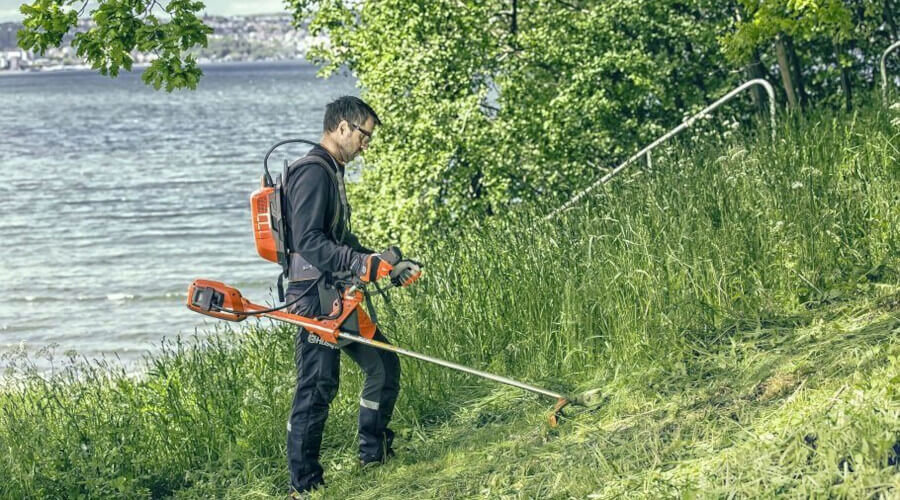
Petrol engines - you can find 2-stroke and 4-stroke petrol engines. These trimmers are very powerful, and highly portable. They are perfect for clearing spaces.
Cordless battery power motors - these are lightweight and mobile. But, they do need recharging or extra battery packs to keep running.
Electric motors - these are the cheapest type of strimmer you can buy. They are light and fairly powerful. However, they do need to be plugged into a socket. The cables mean that this type of trimmer is restricted. They are only really suitable for domestic use and small outdoor spaces.
As with any power tools, health and safety when using a trimmer is first and foremost.
It's important to know the spin direction of your trimmer. As you cut grass, the cutting line or blades will displace the trimmings away in the direction it's cutting.
If the cutting head rotates clockwise, trimmings will eject to the right. This means that the left side of the tool is the best cutting edge. Likewise, if the cutting head rotates anticlockwise, trimmings will be ejected to the left, and the right side of the tool will be the most effective cutting edge.
If your trimmer rotates clockwise, you should work from the left to the right. This motion will ensure you have the clearest view of the work area. If you work in the opposite direction to the trimmer's spin direction, you'll obscure your cutting path with waste.
Parallel Cutting
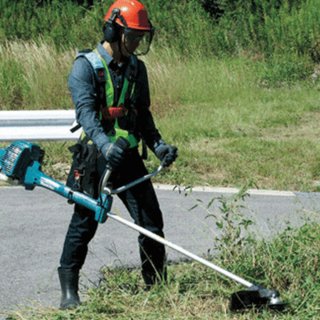
The basic technique for cutting with a trimmer. Parallel cutting involves holding the tool level as you pass it over grass or foliage. The cutting head makes a straight cut of even length.
Tapering
Tapering creates a faded effect approaching objects or borders. This is similar to a haircut! You tilt the cutting head slightly and cut towards the object. Gently lower the cutting head as you approach the object to create a gradual gradient. This technique looks attractive, professional, and natural. But, it takes some getting used to and is difficult to master.
Edging
Edging a border gives you a clean cut along a straight line. It is ideal for the edge of a lawn, along a path or flowerbed. Edging offers a blunt cut that provides a clean, sharp finish. You achieve it by turning the cutting head 90 degrees, so the cut is made vertically. You can then walk right along the edge, cutting as you go.
Scything
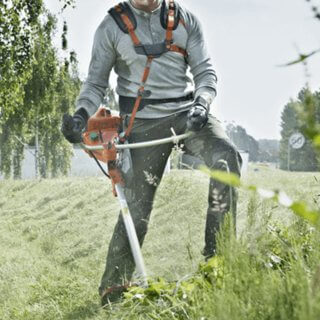
Scything is ideal for covering large areas with longer grass. It is also great for cutting around trees and posts. Scything involves swinging your trimmer in a 'U' shape. You can either cut around you to cover a large area, or around an object. If you overlap your scythes, you achieve a nice even cut. If you leave a gap, and space the scythes out, you can achieve a natural looking, wavy finish.
Screeding
Screeding trims weeds and other foliage growing between paving slabs or through cracks and gaps in pavements. You can screed by tipping your cutting head towards the base of the weed, keeping it just above the surface. You will need a steady hand for this technique. You can easily damage the nylon string of a strimmer trying to screed. Brush cutters with blades may not be suitable for this type of cutting, as you could damage the pavement and the blades.